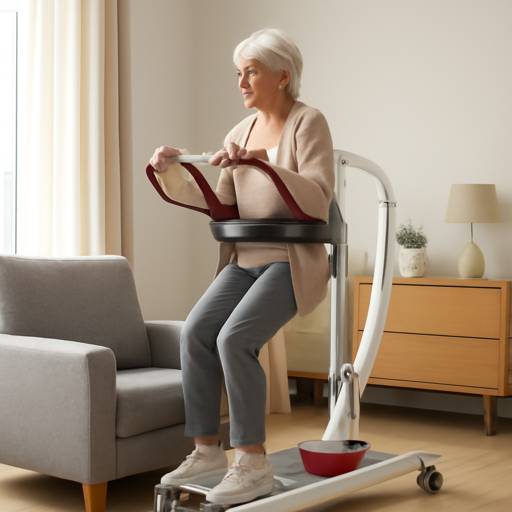
Caring for a loved one or managing your own mobility challenges often turns simple acts—rising from a chair, moving from bed to wheelchair—into daunting obstacles. For individuals who can bear some weight but lack the leg strength or balance to stand independently, a sit to stand lift for home use offers a safe, dignified solution. These devices are not just mechanical aids; they are tools that restore freedom, reduce caregiver strain, and minimize fall risks. Unlike full-body sling lifts, sit-to-stand lifts require the patient to participate actively, which aids in muscle maintenance and circulation. For families seeking a bridge between bed-bound care and full independence, understanding the features, benefits, and practical applications of these lifts is essential.
Why a Sit-to-Stand Lift Is a Game-Changer for Home Caregivers
Home caregivers often face a hidden physical toll. Lifting and transferring a person multiple times a day—from chair to toilet, from bed to wheelchair—places repetitive strain on the lower back, shoulders, and knees. Over time, this can lead to chronic pain, injury, or even the inability to continue caregiving. A sit to stand lift addresses this by using a mechanical advantage to assist both the patient and the caregiver. The patient sits on a padded bench or sling, places their feet on a platform, and holds onto handles while the lift raises them into a standing position. The caregiver controls the movement with a hand control or push-button mechanism, eliminating the need for heavy manual lifting.
For the patient, the experience is vastly different from being hoisted by a full-body sling. With a sit-to-stand lift, they engage their legs and core muscles, which helps preserve muscle tone and bone density. This active participation is particularly valuable for individuals recovering from hip or knee surgery, stroke, or those with progressive conditions like Parkinson’s disease. The device also reduces anxiety: no one enjoys being lifted like a sack of potatoes. Standing transfers feel more natural and maintain dignity. Additionally, these lifts take up less space than a patient lift with a full body harness, making them ideal for tight bathrooms or narrow hallways. When evaluating options, a sit to stand lift for home use should be lightweight yet sturdy, with adjustable leg spread, padded knee pads, and a base that glides under furniture.
Safety features are paramount. Look for models with emergency stop buttons, backup battery systems in case of power failure, and non-slip foot platforms. Many units also include a patient sling that wraps around the back and under the arms, offering additional stability. Caregivers should receive proper training—most manufacturers provide videos or manuals—to ensure correct sling placement and lift operation. Also consider the weight capacity: home-use lifts typically range from 300 to 450 pounds, so verify your patient’s needs. With proper use, these devices can drastically reduce caregiver back injuries and improve the emotional well-being of both parties.
Selecting the Right Features for Your Home Environment
Not all sit-to-stand lifts are created equal, especially when adapting to a home’s unique layout. The first consideration is floor clearance. Unlike hospital rooms, home floors often have carpet, door thresholds, or uneven tiles. The lift’s base must be able to slide under beds, chairs, and toilets without snagging. Look for a wide base that remains stable but has castors designed for home flooring. Some models offer locking castors to prevent rolling during transfers. Another key feature is battery operation. A rechargeable battery allows the lift to be used away from wall outlets—critical when moving between rooms. Many lifts charge automatically when plugged in, so you always have a full battery ready.
Portability is another factor. If you plan to use the lift in multiple rooms, consider a model that disassembles into two or three pieces, such as the base separating from the mast. This makes storage in a closet or car trunk possible. However, disassembly should be tool-free and intuitive. For caregivers who are not mechanically inclined, a lightweight unit (under 80 pounds) that folds compactly is preferable. Pay attention to the seat or sling design. Some people prefer a rigid seat with a backrest, while others find a fabric sling more comfortable. The sling should be machine washable and have easy-to-attach clips. Knee pads are a must—when the patient stands, their knees rest against a padded bar to provide support and prevent sliding forward. Adjustable knee pads accommodate different leg lengths, ensuring proper alignment.
Real-world testing matters. For example, a case study from a rehabilitation center in Ohio found that patients using a sit-to-stand lift at home showed 30% faster improvement in standing balance compared to those relying solely on caregiver assistance. The reason? The consistent, supported standing practice helped rebuild neuromuscular pathways. Another example: a family caring for a 78-year-old father with advanced arthritis found that a lift with wider leg spread allowed him to stand safely without his knees knocking together. They also appreciated the lift’s ability to pivot him from a chair to a toilet, reducing the number of transfers needed per day. When choosing a model, always test it with the actual patient if possible—rent or borrow before purchasing. Many medical supply companies offer trial periods.
Real-World Applications and Safety Considerations
Beyond basic transfers, sit-to-stand lifts can be integrated into daily routines that improve quality of life. For instance, using the lift to help a patient stand at a countertop allows them to participate in meal preparation or take medication with minimal assistance. Some caregivers use the lift to position patients upright during manual bowel and bladder programs, which is crucial for preventing pressure sores and maintaining continence. The lift can also assist with dressing, especially putting on pants or shoes, because the patient is in a stable standing position. These small wins accumulate, fostering a sense of autonomy.
A key sub-topic is fall prevention during transfers. According to the Centers for Disease Control and Prevention, falls are the leading cause of injury among older adults. A sit-to-stand lift dramatically reduces fall risk because the patient is always supported by the sling and knee pad. However, the caregiver must still follow a safe checklist: ensure the brakes are engaged, the patient’s feet are flat on the platform, and the sling is securely attached. Never attempt a transfer if the patient is agitated or if the lift’s battery is low. A case in point: a home health agency in California reported that after introducing sit-to-stand lifts, their caregivers’ annual back injury rate dropped by 72% over two years. The lifts also improved patient morale—one 85-year-old woman told her therapist, "I don’t feel like a burden anymore because I can help myself a little."
It is also worth noting that these lifts are not appropriate for everyone. Patients who are completely unable to bear weight, who have severe cognitive impairment that prevents following instructions, or who have certain spinal injuries (like unstable fractures) should not use a sit-to-stand lift. A physical therapist or occupational therapist should evaluate the patient before purchase. For those who can benefit, however, the device becomes an extension of the caregiver’s arm. Maintenance is minimal: wipe down the frame with a disinfectant, lubricate the mast occasionally, and inspect the sling for wear. Most lifts have a lifespan of 5–10 years with proper care. Finally, remember that insurance (Medicare Part B or private plans) may cover a portion of the cost if a doctor prescribes it as durable medical equipment. Always check coverage before purchasing. By selecting the right lift and using it consistently, families can transform a home from a place of struggle into a space of supported independence.